Training with Intention
The last time I wrote a blog for this site I was still a brown belt and still somewhat struggling to find ways to study and train Jiu Jitsu that yielded better results.
Three main things have happened since, which have given me the confidence to offer further advice to others.
Discovered Ecological Dynamics and the Constraints Led Approach.
In this article I won’t be explaining what this is, or even what my understanding is. It is a widely discussed subject in sport generally and has been debated in Jiu Jitsu for a number of years now too.
If you want to head straight to the best sources of information on Ecological Dynamics for Submission Grappling here are my top resources.
Rob Gray’s book/audiobook (highly recommend the audiobook - read by the author, over the book) - How We Learn To Move
Coach and gym spearheading the Constraints Led Approach for Jiu Jitsu - Greg Souders at Standard Jiu JItsu
Easy to understand explanations in short form posts from - Hook Grappling on IG
Free Discord with many helpful experienced eco coaches - Ecological Dynamics for Submission Grappling
Started using Sherpa: AI Athlete Journal to document my training and began conversing with founder Josh Lu on the science behind journalling for sport performance.
I’ll write again soon on some of the main takeaways from the research Josh has gathered on this subject, how he’s integrated the science into his app, and how you can do the same with your journalling regardless of what method you prefer. In fact, I'm planning a written interview with Josh for the next post.

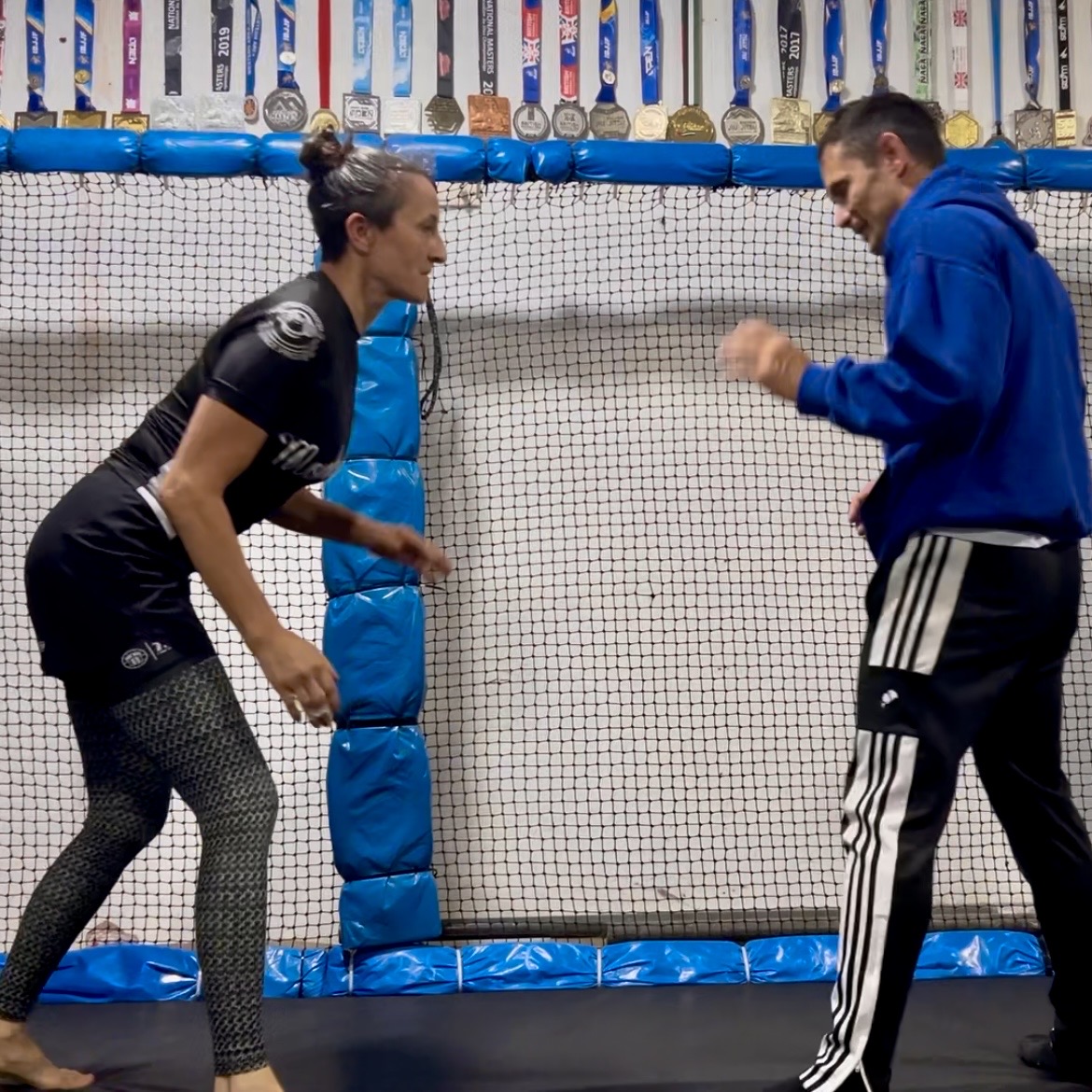
Started training with more intention. Not just for one roll or one training session here and there. As much as my memory and the circumstances allow, for weeks or even months at a time before switching intentions.
These three things are intertwined and feed into one another but the rest of this article is focused on this last one.
I’m still trying to rid myself of habits picked up over 13 years, attempting to memorise techniques and details. Of trying to recall those memories at just the right time in a live roll, to implement them before the moment passes.
The moment almost always passes too quickly. You are always on the back foot when relying on recall.
So, how do we prevent our mind from slowing our body down?
We have to find ways to release it from the heavy task of recall and give it only as many things to think about as it can handle without burdening our body.
At first that is just one thing. One focus. One intention.
With practice it could be two, maybe three or even four.
I have found if I stay with a training intention for long enough, when I do switch, I carry some of the last intention forward with me, at least for a while. I call this Intention Stacking. Traces of the previous intention remain in my mind but more importantly my body “remembers” even more, which means as I work through different intentions over time, the positive effects from that focus bleed over and become part of how I move, even when my mind now has a different focus.
When choosing intentions I’ve found it useful to remind myself that everything is an experiment and that I’m in complete control of my own intentions. I can decide what they are, I choose whether or not to tell anyone else what they are, I can decide which one I’m using in any given roll, with any partner, on any day. I decide how long I train with my chosen intention. I choose how deeply I articulate my intention in my notes, and what level of reflection I give them. I choose when to switch them and when or if I circle back to a previous one.
This level of control over my own training is incredibly empowering. After years of feeling like my progress was at least partly in the hands of others, I finally feel my progress is almost totally down to me, as long as I have training partners. This is not a solo sport after all.
Sometimes my intentions are informed by something my coach points out I need to work on and this is very helpful but not the only way I decide on intentions. If you are unsure of what intentions to play with, asking your coach for one thing you could do better, is a good place to start.
Here are some intentions I’ve played with over the last two years.
Forgive me if they’re badly articulated but they’re noted in a quick ref format I use for my own benefit. If there are any you’d like further detail or explanation on, please contact me and I’ll happily go into more detail.
Proactive gripping and grip stripping. Purposeful placement, push and pull. Strip quickly before they tighten but if too late, play with holding their grip in place instead.
Spine alignment. Angry gorilla. In all positions.
Bypass hands and feet. Go straight to elbows and knees, both offensively and defensively.
Stay off my back and keep partners on theirs. Nothing good happens when your back is flat on the mat for longer than a transition.
Frame with belief and conviction. Reinforce if necessary, use to off-balance, get your body behind your frame (motorbike kickstand), be ready to pummel before your frame is crushed or redirected.
No pulling guard before 3 takedown attempts. Proper attempts!
Use head as 5th limb. Force reactions, use to post, be annoying, free up arms.
Assertive guard, never passive. Immediately be either trying to get top position or attack from guard, don’t settle in.
Get my hips under their hips. From bottom position, to off-balance.
Finish submissions. Find more opportunities for setups, discover weaknesses, stay tight, train teammates to defend better, further increasing effective finishes.
Don’t fight force with force. Not for longer than is useful anyway.
Play with reactions and counters. Keep partners guessing. Move like you expect your first try to work but know it probably won’t, so be ready with your counter.
Split attention. If I can split my attention more effectively than you can split yours I can distract you while not distracting myself too. Think top/bottom and left/right.
Breathe through nose only. Regulating breathing helps keep gas in the tank.
Best friend, worst enemy. Offensively I grip you as if my life depends on staying attached to you. Defensively I frame like my life depends on getting you off me.
Purpose & conviction. You make a move, I react like it was exactly what I was expecting. I make a move, I mean it, whatever it is.
These are just ideas and I give them to you here not so you can necessarily copy them, though you are obviously welcome to and if you do I’d love your feedback, but so they might spark your own ideas.

When playing a CLA game, you’re given a goal or objective, a way to win the game (unless continuous but even then you will have a goal, it just won’t win you the game for a reset or switch). For example, connect your hands around your partner and force their hands or hips to the mat.
You may, as well as this goal, be given a general task focus, something else to think about, play with, try to achieve, within the game. For example, try to maintain a strong posture with your spine aligned.
In my opinion, both these are giving you intentions (connect your hands and maintain strong posture, while you move your partner) and should be all you’re holding in mind while you play the game.
I find if I’m also trying to hold a different personal intention in mind, (for example "don't fight force with force") this can be overload. I use my personal intentions in sparring sessions and open mats instead.
In time, with more practice, I'm hoping I can start to combine my personal intentions with the intentions of the games but the idea in both these scenarios, while playing CLA games your coach, your teammate or you, have designed for a practice session, and while free-rolling in sparring sessions or open mats (or whatever your gym calls them), is that your mind is cleared of the necessity for recall. Decluttered from the multitude of things you could be thinking about, and instead given only a small number of things to “hold in mind” while your body is free to move around less inhibited by your noisy brain.
Grappling is rarely static. At a micro level it is never static. If you are constantly trying to recall a technique your mind will freeze your body and in that moment your partner has moved and the situation has changed. If your mind is more free to let your body move, you’re in a better place to adapt to exactly what is in front of you, instead of what was in front of you a moment ago.
Training your mind is as important, if not more, than training your body and it takes just as much practice.
You have nothing to lose and everything to gain by implementing more intention into your training.
Keep it experimental, record your intentions, goals, analysis and results. This will help you identify areas of weakness, create space around the weakness to explore opportunities for problem solving and as a result you will become a far more adaptable grappler.


